Windows Word For Mac Email Merge 3,8/5 8637 reviews
Hi all, We have an application where a part of the functionality is mail merge templates creation and editing for later mail merge execution. Microsoft word for mac student. For that purpose, we implemented a WebDAV server and use ms-word protocol request. For mail merge documents we point a mail merge data source to http location (that contains only headers. The problem is that this approach does not work on Word for Mac as http data source is just ignored there.
The question is: Is this by design? Is there any other way to support remote merge data source for Word on Mac? Any help is appreciated. Hi, Thanks for posting here. This forum(Word for Developers) is for developer discussions and questions involving Microsoft Word, like developing issues related with Word Object model.
Since your issue is more related to Word Product, I would move this thread into the following forum Regards, Celeste MSDN Community Support Please remember to click 'Mark as Answer' the responses that resolved your issue, and to click 'Unmark as Answer' if not. This can be beneficial to other community members reading this thread. If you have any compliments or complaints to MSDN Support, feel free to contact.
Hi, As far as I know not only in Word 2016 for MAC, but also Word for PC. Accessing any of the named data sources from an HTTP location isn't supported. Save the file to your local hard drive before you use it as a mail merge data source. This is by design behavior in Word, you can get this information from this support article: Hope it's helpful. Regards, Emi Zhang TechNet Community Support Please remember to mark the replies as answers if they helped. If you have feedback for TechNet Subscriber Support, contact.
Apr 19, 2017 - Master the popular—and sometimes misunderstood—mail merge feature in Microsoft Word 2016 for Mac.
By With Office 2011 for Mac, your guide to mail merging in Word is Mail Merge Manager. You can invoke Mail Merge Manager by choosing Tools→Mail Merge Manager from the menu bar. It’s designed to be used starting at the top in Step 1, and you work your way down to Step 6.
The steps in the Mail Merge Manager are as follows: • Select a Document Type. Choose from four types of mail merge: * Form Letters: Customize a letter with personal information or data. * Labels: Make mailing labels, tent cards, book labels, and DVD labels. * Envelopes: Print envelopes of any size. * Catalog: Choose this option to build custom, personalized catalogs, brochures, and price sheets.
For example, you could pull pictures from a database to create individualized custom catalogs based on customer purchases, category, or some other criteria. • Select Recipients List. Choose a data source for the mail merge. • Insert Placeholders. Choose the field names (for example, column names, headers, and column headers) and position them in your document. • Filter Recipients.
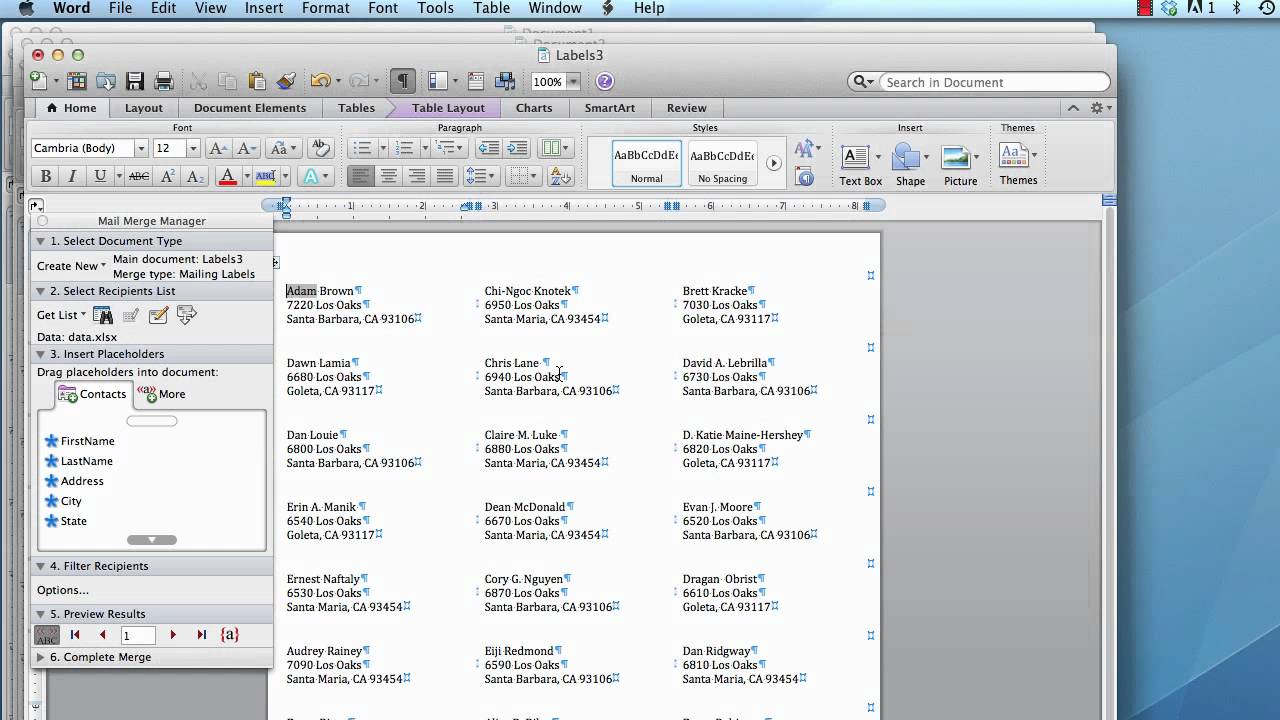
Set rules as to which records will be retrieved from the data source. • Preview Results.
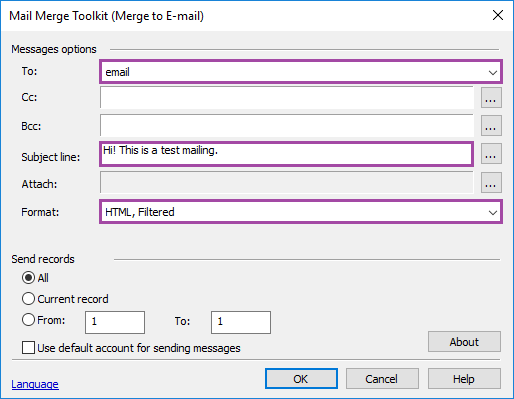
See exactly how your document looks with data before running the mail merge. • Complete Merge. Run the merge. You can merge to a printer, a single Word document, personalized Word documents, or e-mail messages.